How Will 5G Mobile Affect Our Daily Mobile Experiences?
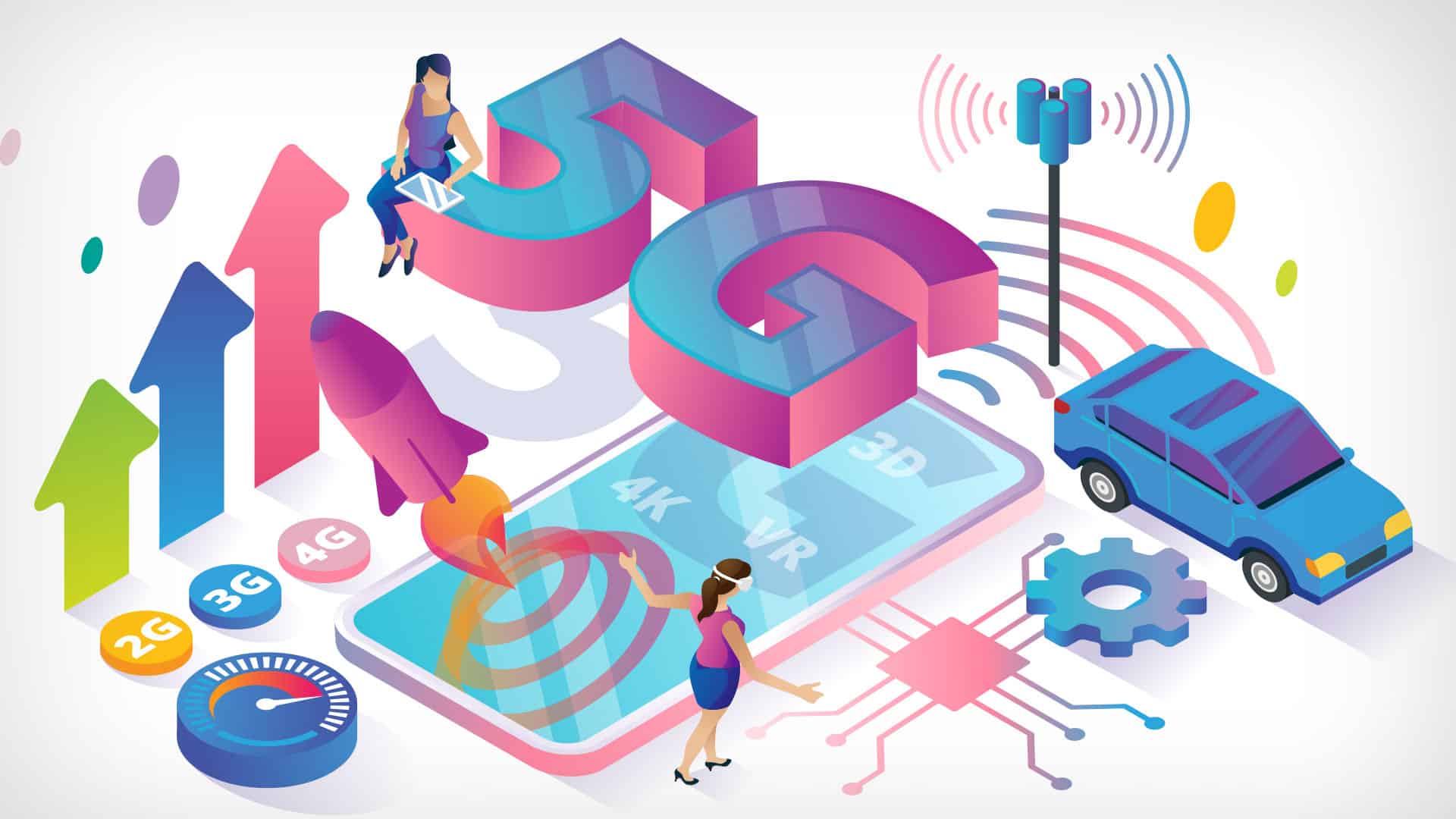
5G mobile smartphones and devices are now available from every major American mobile provider, and emerging technologies, like IKIN’s RYZ holographic mobile device, are designed to capitalize on 5G-bolstered broadband. The term “5G,” ubiquitous in tech marketing and business forecasts, evokes feelings of giddy anticipation and expectations of a new level of mobile experiences. That 5G officially launched about three years ago has not dampened the excitement, though the delay in delivering on 5G mobile promises of lightning-fast download speeds, ultra-low latency, seamless streaming, and more has raised some eyebrows from early adopters who have yet to experience these 5G selling points in action. The wait, however, may finally be over as many tech insiders are predicting that 2022 is the year 5G finally shows what it can really do.
The Path Forward for 5G Mobile
This article is a continuation of the IKIN Blog’s ongoing exploration of 5G. The first installment defined 5G within the history and evolution of mobile technology. We now focus our attention squarely on what 5G mobile experiences are like today–particularly in relation to content streaming–and what they may grow into in the coming months and years as 5G strengthens its position and expands its applications.
5G Streaming
The two biggest talking points in the promotion of 5G mobile are undoubtedly its much-improved data transmission speeds and what is popularly termed “ultra-low latency.” 5G boasts transmission speeds up to 15 or even 20 Gbps, and it has improved latency to ten times less than that of 4G. These numbers suggest that 5G should be a notable step up from the streaming experience currently offered by 4G. But, how much better are we talking?
Can 5G Mobile Stream 4K Video?
Currently, the goal for 5G mobile is to be able to stream 4K, the quality standard for Ultra High Definition (UHD) content. Streaming giant Netflix has offered customers 4K streaming content on their home service since 2014 and competitors, like Amazon, Hulu, and HBO, have followed suit over the years. 5G hopes to make that same content available to mobile users. Though, it’s unclear when that hope will become a reality. The issue complicates when talking about live streaming 4K content–be it real-time sporting events or personal live streams, instances where buffering and time delays become significant issues. According to digital trends, while 4K streaming via 5G mobile is theoretically capable, the practical application is still out of reach of today’s 5G mobile networks. However, 5G mobile carriers are making the goal of 4K mobile streaming a priority.
5G Mobile Carriers Move On 4K Streaming
Promises of 4K mobile streaming abound from 5G mobile carriers. For instance, in 2021, T-Mobile announced Magenta Max, a wireless plan intent on showcasing their Ultra Capacity 5G mobile network. According to T-Mobile, this new plan will allow customers unlimited UHD streaming up to and including 4K. A few months later, AT&T updated their Unlimited Elite plan claiming 4K streaming over both 4G and 5G mobile.
Key 4K Streaming Test Cases By 5G Mobile Carriers
On the practical side of 4K mobile streaming, a few test use cases have trailed 5G’s streaming capabilities. One of those biggest test cases came in 2018 when Ericsson partnered with AT&T, FOX Sports, Fox Innovation Lab, and Intel to trial run 4K streaming of the U.S. Open. The test was a success with the 5G network maintaining uplink speeds of over 300Mbps, exceeding the 60-80Mbps needed to successfully transmit the event’s 4K video content.
Earlier this year, Verizon and AWS Wavelength announced they are currently working on a 5G mobile test case that would use Verizon’s 5G Edge network to broadcast Bloomberg TV+ 4K content without the need for satellites. Tami Erwin, CEO of Verizon Business, claimed that “5G and edge compute have the potential to revolutionize the media and entertainment space and reinvent how global business news is produced and consumed.”
Mobile 5G Of Tomorrow: IKIN’s 5G Holograms
Dimensional technology frontrunner IKIN has been developing its holographic device for mobile, the RYZ, since 2018, and its rise has coincided with the launch and growth of 5G networks. From its inception, the RYZ was made with 5G in mind. And, while the device works with 4G networks, it benefits from 5G’s improved data speeds and ultra-low latency. The RYZ is currently being trialed in a 5G testbed developed by the Department of Defense. IKIN’s 5G hologram technology is being utilized by the US Marine Corps in a smart warehouse on a private 5G network that is using the RYZ to organize, locate, and visualize stored items as volumetric 3D holograms. As 5G capabilities continue to cement, additional applications for 5G technology, IKIN’s hologram technology included, will also expand along the lines of personal use and improved business practices.
To learn more about IKIN’s ongoing developments in holographic technology and hologram applications, please visit the IKIN Blog. And, remember to follow IKIN on social media.