Featuring: Taylor Scott, IKIN Co-Founder & CTO
Hosted by Laura Lewis
Laura Lewis (LL): Welcome to RYZ Reimagining Our Future brought to you by IKIN. In today’s episode Holograms: Past, Present, and Future, we hope to inspire thought, creativity, and action by exploring exciting advancements in future technologies. My name is Laura Lewis and I’ll be your guide through this discussion of thought and innovation across the globe. So, get ready to dive deep into the minds of some of today’s most innovative thinkers.
My guest in the studio today is IKIN Co-Founder and Chief Technology Officer, Taylor Scott. Taylor is a true visionary and oversees the company’s initiatives for creating holographic solutions for consumer, business, and other industrial applications. Taylor’s diverse background spans a broad range of disciplines that includes holographic technology, biochemical engineering, organic chemistry, electronics engineering, and artificial intelligence. He resides in San Diego, California, as well as Austin, Texas. We’re so fortunate to have him with us today. Welcome to the program, Taylor.

Taylor Scott (TS): Thank you. I’m happy to be here.
LL: You just flew in from somewhere. You’re all over the place
TS: From everywhere.
LL: I know. It’s so great. I love that you live here in Austin, Texas, where we’re recording this, as well as San Diego. You live a very exciting life. Today, we’re going to be talking about some really interesting and exciting things that really pique my interest greatly. Because this is our first podcast of RYZ: Reimagining Our Future brought to you by IKIN, and you’re the CTO and one of the co-founders of IKIN, can you go ahead and explain to our listeners, our viewers, what is IKIN and how it came to be?
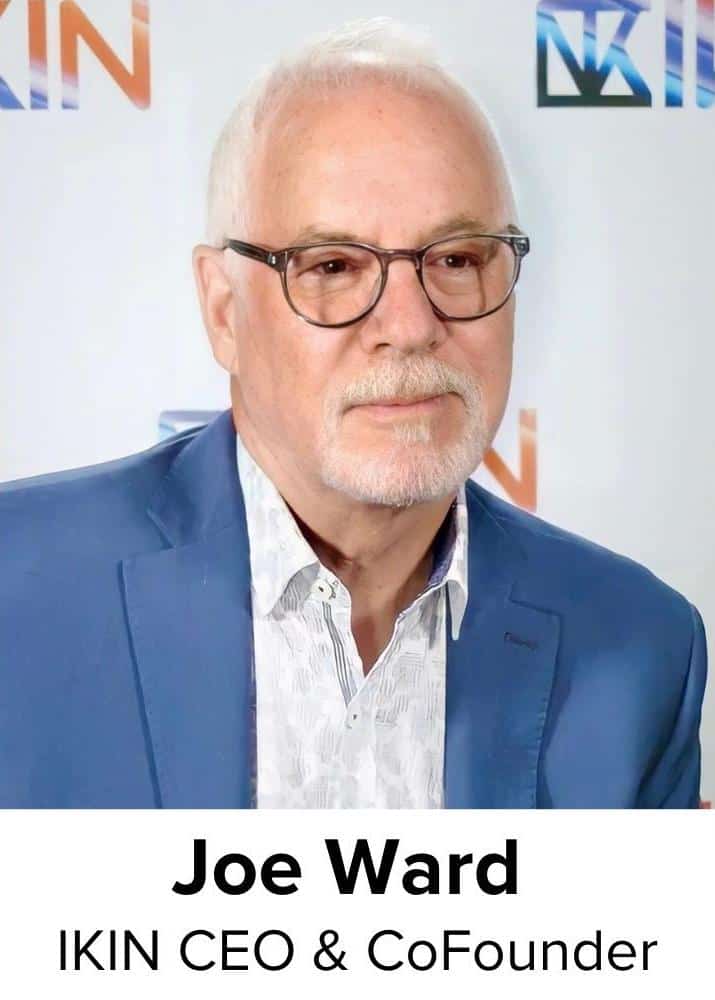 TS: IKIN started as an obsession of mine to create a new virtual experience that just had never been done before. For me, it was a hundred percent intentional just to make video games so I could play things like Legend of Zelda, because I was so obsessed with them, in a new visually stimulating way. It was right at the time when we started IKIN, when VR was just getting its legs but it wasn’t quite there yet. Merged Realities was a really great concept that was starting to grow its legs, but definitely was struggling to get on the scene. We found a really unique way of creating these light images. They’re really powerful, really stimulating. Then, fortunately, I met Joe. Joe and I really dug down into the ability to create a universe inside this environment. It’s very easy to create something that’s visually stimulating, but to let somebody create their own content for it was a really big passion for us, and so that’s what IKIN is really focused on. It’s not just creating a new visual experience, but creating your new visual experience.
LL: You’re talking about Joe ward.
TS: Yes, Joe Ward, my co-founder,
LL: What was Joe’s background when you guys converged?
TS: We call Joe the ‘telecom guy’. He used to be a salesman that was focused on phone systems and technology, and, definitely, incredibly talented on the sales side. It was funny, because you have Joe – and then you had me, a wide eyed 24 year old. But, we just worked incredibly well together, and still do after years together, and managed to amass a team of incredibly talented people, everything from the contract manufacturing side to the design side, and that he’s really been able to pull together and create a seamless structure in IKIN.
LL: A little bit more about IKIN then, you guys are working on a variety of things. What are you working on currently?
TS: We have some really unique systems. At the heart of what IKIN is working on is a passion for individual experiences. One of the things that we have there is a new type of lens foil system that lets us sustain optical light in space. We can project light onto a surface and sustain it even if you’re out in a very harsh environment. We even build test devices to see just how hard we can push the projection systems, to see what’s the limit of this, and it’s really impressive. One is the actual projection capability of experiencing it. The other is the ability to generate scans or volumetric scans just with your smartphone. If you have an object that’s precious to you, or you think is really cool, you can actually just wave your phone around it in a unique way, generate an actual scan of it, and then project that in the hologram forever. You can literally create a living twin of anything that you have. This is the mobile phone form factor for the overall system. We also have larger systems that we refer to as the ARC, really powerful, higher computation. We’re able to get those really advanced rendering systems, really beautiful experiences that are less mobile, but equally as powerful.
LL: When you’re talking about beautiful experiences, you’re talking about beautiful visual experiences with the holograms.
TS: Exactly.
LL: But, it’s the IKIN’s way, and we’ll get into that. Let’s go ahead and talk about holograms. First, what is a hologram? Let’s talk about the history, and when do they show up in this world?
TS: I love the subject of holograms, because it’s so different for each individual. The physics definition is really stale when it comes to what the average user would be thinking about. I remember, as a child, obsessively collecting Pokémon cards. They were holographic, they had that sheen to them, or they have a dimensional thing. Technically, if you think about it, that is projecting, sometimes you could view images from different angles. But, that is, in no way, what the average person considers to be a hologram. You think about when you go to a stage show, or when you would see the resurrection of dead celebrities, and things like that. The foundation of that technology is back in the 17th century, that they’ll find at Disneyland, things like that. It’s been around for quite a long time in that context. While that’s technically not the hologram that people consider, it’s as visually stimulating as that experience. It’s funny that people’s definition has actually changed with pop culture. Star Wars kind of changed the concept of a hologram, that of Princess Leia floating in space. People automatically have latched on that’s the hologram that we want. It’s quite funny because, if you think about it, it’s contrary to the rather limiting definition of a hologram. IKIN is really passionate about not viewing it from such a scientific standpoint. But, instead, looking at the user psychology – what do people want from an experience standpoint that would be really engaging and powerful. There’re many different versions of that, whether it’s a glasses and goggles based systems, whether it’s a free standing system, whether it’s trying to create multiple prismatic light systems, but at the end of the day, IKIN wants to create a foundation where every user has access to a simplified system that they can understand immediately and create content for.
LL: I like to look at this as a consumer. I’m a sci-fi person, too. I love the experience of seeing a hologram, experiencing hologram. I can tell you, maybe 30 years ago, there was a movie theater in my hometown that had this hologram art. When you walked in, you’re going to go see a movie, but right smack in the middle of the lobby was an elevated platform and there was this really cool hologram in the middle of it. It was a stop factor: ‘Ooh, ah, this is amazing’. I get goosebumps when I talk about it, because it does stimulate something. I want to get there about our brains and everything in a little bit, but just in general, about how holograms fascinate people. Why is that? Why does it give us that? That excitement or that experience that we have that feels like ‘I’m getting goosebumps when I talk about holograms’.
TS: I’m the exact same way. It’s that wonderment factor. There are some really unique studies on the neuropsychology of individuals who respond to new visual stimuli. We get the statement all the time constantly. Why do we need VR? I hear that always. Why do we need hologram? Why do we need devices like this? It’s such a funny concept when you think about it, because, the truth is, why do you need an iPad? Why do you need a tablet-sized form factor for a personal computer? You don’t. You have a computer. You have a phone. You can still pretty much do everything possible in the world that you need to without having a tablet. But people love tablets, because it’s a new way of experiencing something. There have been a lot of tests done on the effect of novelty in the brain. It’s fantastic, specifically in the dopamine response of people who engage in new experiences. Humans genuinely need to have novelty because it gives them that sense of wonderment. That pushes the brain to have to process more data, more information. It’s literally pushing you to improve your brain, and, at the same time, it’s releasing pleasure. You’re actually enjoying it. Your brain is technically enjoying a new experience. Do you need VR? No, but that moment where you go ‘wow!’ is so good for your brain. Holograms are the exact same way. When you see that hologram, when we would do stage show projections and have people dancing on stages, you could physically see mouths open and see people go “wow!’. That moment of wonderment is so critical for humans; we have to continue to strive for that. Even studies on rats, where rats would automatically, even though they had been in a maze that they knew a route, want to explore routes that they hadn’t seen before, before going back and finishing mazes. Even in rats, they automatically seek out novelty and new environments.
LL: I am a nerd. I’ve got a science background. I love all this stuff. That’s why I love talking to you. We’re talking about dopamine, neurotransmitters, which give us a rush. People have dopamine highs just in anticipation of a cup of coffee. Also, dopamine gets people in trouble with addictions, but it’s a natural thing that happens in our brain chemistry. I find it really fascinating that holograms do that to us. That really explains the feeling that I was just having, reflecting upon when I would see the hologram, or even in movies. Generally, how are holograms used today for consumers? Let’s talk about that in general. I know as a consumer, I’m like ‘yehey! A hologram in a movie! I’m there!’ Then I want to talk about how else are they being used?
TS: If you think about it, in sci-fi movies, they’re used to express that futuristic vibe. In a practical sense today, they’re used in entertainment, performances. They’re also used a lot in advertising. There’re a lot of new visual systems. They’re starting to get to the point where you can have really cool head mounted gaming systems and cool experiences, which is quite fascinating. For us at IKIN, we really want to push toward a new visual style of holograms that people haven’t had access to at all. Major stopping point with what we’re doing now with holograms is they’re way too big, and you really don’t have access to it for more than two minutes. I’ll never forget it when I would see people’s faces on the first five rows when we would test objects with holograms. You’d see people actually crying at times where they would get incredibly emotional over the system. Two minutes and thirty seconds later, they would have zero access to anything like that. Even though that moment was so emotional for them, they couldn’t take it home and never experienced anything like it because it’s an instant in time, it’s a small space, but it’s a big device. The content has to be curated so long and so perfectly for that system because it’s so hard to generate it. I would look at that now. That’s what started the experience side for me; the reason why the use cases are limited is because no one was evolving that technology. No one else was evolving it with the consumer in mind, rather than the experience in mind. That’s why IKIN is really pushing forward, first with games, we do want to give people the ability to experience games, but we didn’t want to just give people the experience of cool gaming, even though that’s all I wanted. We thought about the one thing that would really improve the emotional experience, the emotional connectivity of people, and it’s social media and the ability to tag on to existing social media connections, emotional connections with your family, with your friends, and then bump that up with living holograms from the content that you already have on your phone. That’s a way of taking a system that’s built to make you feel more emotion, then taking things that you’re already emotionally attached to, and just improving them. We see that as being an area that people really haven’t been able to conquer. We think about a head mounted system, it’s really hard. You got a visor on, so it’s really hard.
LL: When you say head mounted system, that’s where we can really dive in. When you talk about VR, Virtual Reality, usually it’s that headset or the goggle experience. How is IKIN doing holography differently then?
TS: That’s why we’re so excited when we are now in our alpha and our beta testing, seeing people’s responses to it. It’s literally a small attachment that you plug onto your phone that’s portable, collapses open, and literally connects to your phone’s entire rendering environment. Anything that lives on your phone can be projected and translated. We have a unique artificial intelligence that knows what you want to put into the hologram, and also knows what perception you really want to gain out of it. Instead of just being a static environment where it’s content that’s been made for a hologram at this point, it’s actually edited and translated every frame to match your perception of the hologram. But, it’s so portable, you could literally walk to Starbucks from your house and be in a holographic conversation consistently, and be able to maintain that optical field, and be able to project yourself into someone else’s hologram at the same time.
LL: I know that you’re talking specifically about the device for consumers. I’m extraordinarily excited about it. I cannot wait to get my hands on it. What I heard you just say was that you could do video; you can live video in a hologram. You can use static images; you can pull up maybe a memory of somebody and even have more of an experience with them. That is my understanding of what you just said. How about using holograms in other ways, in other areas, in other industries? I know that you’ve done some things with the Department of Defense, or some other business things on the horizon, I’m not sure if you’re allowed to talk about that. But, holistically about IKIN or holograms, what’s The Suite?
TS: The Suite is a flexible environment that any developer can be working in and, immediately, if they have a concept that they want to see in the hologram, all they have to do is put it together like they would for a normal environment – whether it’s a PC, whether it’s a phone, iOS, Android, what have you – and it will automatically convert it. For example, one of the things that we’re currently working on is the ability to look at CT scans and medical scans inside of the ARC. It’s a large scale system. It’s really attuned to the user’s perception. If you have users with the ARC and they’re trying to identify and understand spatially what’s going on, say, in a neurological scan, it’s a completely different environment. You can actually put your hands into the ARC and a holographic representation is made, and you’d be able to take things apart, actually edit, and move things. It’s a whole new way of experiencing things. The benefit of that is novelty and wonderment causes your brain to release dopamine. It also causes you to increase your focus. We refer to emotional engagement per frame. Everything from architecture, design, education systems, medical systems… we can actually quantify that your retinas are looking at the hologram more than the 2D screen that you’re used to because the eyes are always looking for novelty. It’s interesting, we did a test with a child recently, a very young infant child. With the RYZ, you have the phone here, and then you have the holographic space. With that, what would happen if we took the exact same visual footage? It was just fireworks that were going off. We played the same fireworks on the phone and then we played the same set of fireworks on the RYZ. Ninety-eight percent of the time, the child was fixated on the hologram, even though it doesn’t have a lot of experience with phones, it’s an infant. It was interesting to see the fixation of the eyes, as if it was easier to digest the hologram. That novelty is really appealing even to children’s brains. It shows that if you were to take that to a very serious thing, like diagnosing something on a medical scan, or being able to understand something mechanically, or even having more focus in an education system, it improves that even more. It’s nothing but beneficial.

LL: It’s a great teaching tool.
TS: Exactly.
LL: To be able to get in there and really engage in there. I’ve heard how people try to train with holograms in a VR environment. What are the limitations if you’re using a headset and all that other stuff versus what the IKIN ARC is? By the way, for explaining to our listeners, what the ARC is, you say it’s a big screen projection? I cannot even describe it, because I’ve seen it. First of all, let’s talk about describing what the IKIN ARC looks like, because you mentioned eye tracking and that kind of thing. You’ve talked about the smaller device, but in a larger one, as a teaching tool, versus something that’s cumbersome, like sticking on the headset and everything else, what’s the difference?
TS: I love VR, personally; however, I’m very sensitive to it. I will immediately get headaches or I get nauseous. I was waiting for years for VR to come out and then it took up some time and I wasn’t able to really enjoy it. Now, great strides have been made and so I can really enjoy those immersive experiences. But, it’s completely encompassing. It’s overwhelming to the senses, not always in a bad way, in a really cool way. Even just the loading screen of the Oculus is incredibly powerful. What was interesting is in actual testing of educational environments, the response from some people was that retention of information was actually lower in the VR environment than it was even in just a stale static, just a talking head informing you of information. It was because the first 30 minutes of the lecture was them going ‘oooh!’ because they were so overwhelmed by just the new immersive environment. There’s a limit when it comes to over-immersion and under-immersion. The ARC is a way for us to create enough space on the hologram to where even your peripheral is covered. Imagine if your computer monitor was essentially just flipped up into a holographic device, small, can fit on your table, has its own computational system, so it has its own operating system and is able to do all sorts of things. With that, we are able to create everything from gaming systems, education systems, to communication systems. The beauty of that is it’s immersive. It’s powerful. It also knows what you’re trying to see. You can look around objects, look inside objects, you can move in and out of the hologram. But, at the same time, you can easily look away and write notes, then jump back in, then look away, write notes, and jump back in. It’s a new way of learning something without the detriment of having to completely immerse yourself. You can’t really take off VR headsets and write something. You can’t really see the instructor. It loses the human element because the human instructor is now either a little bit of a creepy avatar or it’s a person with a giant headset that’s being recorded. There are some issues there. That comes from the cumbersome nature of having head mounted systems. Fortunately, we’re now evolving in technology to the point where computation is getting better so we can do more things in a small amount of space. Now they can get smaller and smaller and smaller. The other side is power management. Now we’re able to fit more power in a much smaller space. That’s really the key to getting to that idealized solution of you just having a pair of glasses on your head and you’re able to see this whole new world. But, that’s years away to have that really comfortable, non-cumbersome system. In the meantime, there’s much room for new experiences. But, when new experiences come out, for example, even volumetric displays, there’s a litany of volumetric displays that have been brought out of mobile phones, different refractive indices changes, where you can move a device and see the 3D environment in space. I love it because the response from the consumer has been ‘that is so cool!’ Then, 20 seconds later, it goes on a desk, and they never look at it again, unless they’re a designer or somebody that’s really invested in it. The reason for that is people think that volumetric is the same as a hologram and it’s just not to people. Technically, it is, if you’re going by the physics definition. It’s showing light and showing a world in three dimensions. But to just have it be volumetric is in no way what the average person wants. We did a lot of testing with biometric systems and the user would literally sit there and go, ‘Oh, that’s so cool!’ and immediately regulate it to be just like a mobile phone. All this work goes into the systems and it’s not quite what they want. They need that beauty and novelty. That’s what we’re able to provide with the ARC: immersion plus novelty.

LL: You’ve talked about volumetric holography a bit here and there. Can you please define what a volumetric hologram is, to someone who has never heard of it before?
TS: ‘Volumetric’ is an interesting word when it comes to hologram because ‘hologram’ means it’s a surface that is projecting light in multiple directions. You think about it. If you move left, move right, you can see it. ‘Volumetric’ is the exact same thing. It’s a repetition of the concept of volumetric hologram. It’s a volumetric screen or it’s a hologram. But what’s funny is nobody really considers the fact that volumetric is consistently being created to where you have a screen. It has a very heavy computational process behind it. The current systems that exist today are multiple rendering cameras in one environment and it’s putting it out and changing the refractive index. Really beautiful, especially when it comes to art pieces or temporary immersive pieces where it’s a whole wall and you walk up to it. It’s just really cool. The issue is when it comes to a consumer using that as an appendage. We refer to it as an appendage, but if you think about your phone, the iPhone went from a really cool thing to having to ‘if you don’t have an iPhone, you cannot exist today’. You just can’t. You have to either have an iPhone, or some sort of phone, or have a friend that has one that’s fully charged, that you can utilize for necessity. Volumetric really isn’t that. Volumetric is beautiful. It’s powerful. It does create improved experiences. But, what we found in our studies at IKIN is, we always try to understand why something isn’t working in the marketplace today before we jump to building something. When it comes to people’s responses to a volumetric system, they love it. Love at first sight, then immediately boredom, because novelty is incredibly fast fading… because they can’t generate really fast, rapid content. They can’t use it like an appendage. You think about your mobile phone, you’re able to go through 100 apps a minute. You can jump through constant information on Instagram. You don’t stay on one image for very long, you’re able to consistently jump through and enjoy the experience.
LL: Some people are faster at that.
TS: Exactly, especially the children. That’s the difference between volumetric and what we define as a hologram. We define it as a perceptive volumetric hologram. We can take a single rendering environment, and we can make what is perceived as volume, but from 2D imagery, which means we don’t have to go into a rendering environment and fiddle with all these little knobs and tweaks, and then export it, then put it in a rendering environment and then let you plug into it. For us, the big passion that we’ve noticed people want is not volume; they really don’t care about it. They want to see glowing light in space. It’s always the same thing.
LL: Glowing light in space…
TS: It’s all people want to do.
LL: I’m in.

TS: Exactly. You think about those stage shows that you see, it’s just glowing light in space, but people absolutely love it. It takes them back to Princess Leia. It takes them back to their childhood, Disneyland, all those really cool experiences. We started with the foundation of what are the systems missing, and they’re missing that ethereal, it’s in your environment, it’s new. On top of that, we added volumetric as the secondary feature. Even when we test our system, it’s fascinating. People’s response: they love the volume, and then they immediately put it on the table and just enjoy it like a visual system of floating lightened space. The volume is always of less importance than the visual stimulation of seeing something move from the phone and float up into this ethereal world.
LL: That’s really interesting. Can you give me an example of that? What would they want to look at?
TS: We refer to it as interplay. We go through some really fun systems at IKIN, but one of the things that you can do is actually physically touch the phone. People don’t realize that when you look at the system, but there’s actually a touchscreen in front of the visual system. As you touch objects and you swipe them up – you can think about games that require that swiping motion – they will literally float up and be translated into the environment. You can actually touch the actual hologram from your perceptive angle, and bring it back down into the phone. Everything from gaming systems to communications, being able to write a text, then swipe it up and send it away, you have that dopamine that you get from the beauty of something that’s new, added with the emotion of experiencing something in that space. Being able to do that over and over with different media, it really is taking something that’s new, something that’s impressive, and then making it something that you can completely control.
LL: You talked about emotional engagement. I know you guys have done studies with emotional engagement, that’s really pretty much what you’re referring to as well. What about emotional engagement and your brain? Can you explain a little bit about that?
TS: EEPF, emotional engagement per frame, is a metric that we use to measure the amount of attention. We call it unfocused attention. There’re quite a few types of attention – sustained attention, split attention – it’s very interesting when you go into the psychology of it. We were more focused on the unfocused attention, which is not when you’re trying to study a textbook, and your eyes are piercing and you’re trying to focus on something. But, you’re in more of a static space, like social media, you’re just enjoying the moment. Where do your eyes focus? There’s a lot of metrics that they do now of watching where you look, when you go to a website. We do that, both on each, the systems on the flat screen as well as the holographic screen. Our real goal is to measure the flexible, comfortable focus that you put into the hologram. The metric is really interesting because it’s significantly higher in the hologram, to where people will actually ignore important things on the phone, to look at and to linger at something that’s occurring in the hologram because it’s more enjoyable. It’s easier to focus on because it’s so much more stimulating. You think about the impact that that has on your emotional experiences, communicating with somebody. We’re all now pretty used to Zoom. People now get the Zoom fatigue of just seeing somebody there. Now being able to transform that, now the emotional engagement makes it easier to be talking to somebody in that holographic space for longer. I think about advertising as well. I know, for me now, when that little timer is going ‘5…4…3…’ it could not go faster for me now. It needs to go significantly faster for me. But, if you put it into that space that’s so much more appealing, even just increasing that by one second is of such value from an advertisement perspective, from a communication perspective. Being able to increase that that’s what that metric is able to define.
LL: Emotional engagement, you’re talking about feelings and emotions, even when you refer to the baby looking at the hologram, and more so than something else. It brings to my mind about the natural physiology of our brains and our desire for change. Like you said that there’s a natural desire for rats to go along amaze because they want that, they want stimulation. That goes hand in hand with growing neural pathways. Experiencing holograms with your emotional engagement, we also know – I’m going to speculate because I’m a brain expert all of a sudden – that our brains actually could be growing from this… Our new neural pathways… Our new experiences because that’s the way it works, right?
TS: It’s interesting because there was a really unique study that I enjoyed. It was the fact that people who change the position of furniture in their offices and living spaces had statistically more focus and attention and creativity because their brain had to consistently adapt to a new environment. The brain is not meant to be stagnant. You see what happens when people become exceptionally stagnant? Oftentimes, depression follows because the brain doesn’t have the same chemical reception that it needs at that time. That’s just furniture, being able to have that as a metric. Much less watching the eyes of somebody increased when they are looking at something really visually stimulating. That’s why VR is so cool. You really get that ‘wow!’ moment. But for us, we wanted to take that ‘wow!’ moment then attach it to human connection. That’s why we’re so focused on the social aspect, because if you can increase that response, it’s helping your brain, it’s actually making you a better person. It’s helping you think. Then, it’s helping your relationships. It’s helping you with your loved ones. It’s helping you experience beautiful things. There’s really nothing more important to me that I can think of.
LL: I love it. I really do. Let’s go back to the discussion about Oculus, headsets, AR VR, XR… First of all, AR, what is it? VR, what is it? XR, what is it? Tell us. Can you explain that?
TS: VR, completely immersive experience. You enter the zone, you hear the ‘oowahoowah’, and you’re in that white room.
LL: Virtual reality.
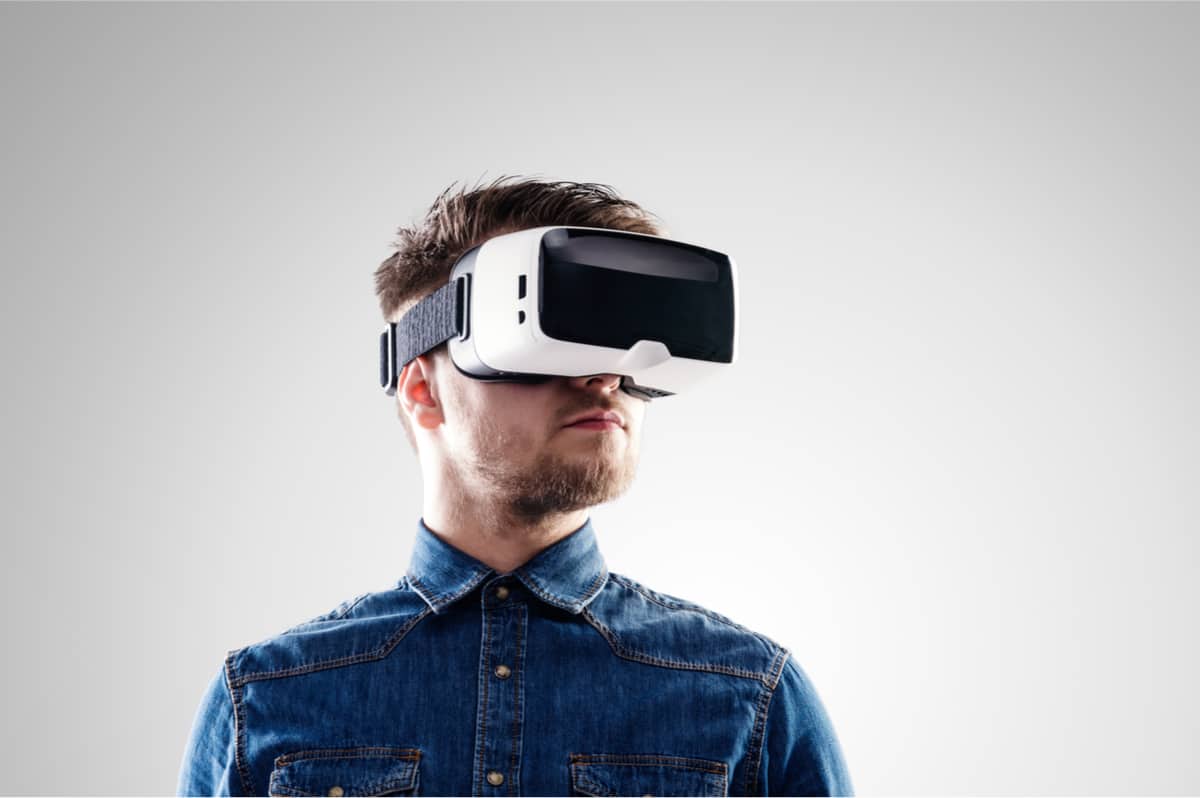
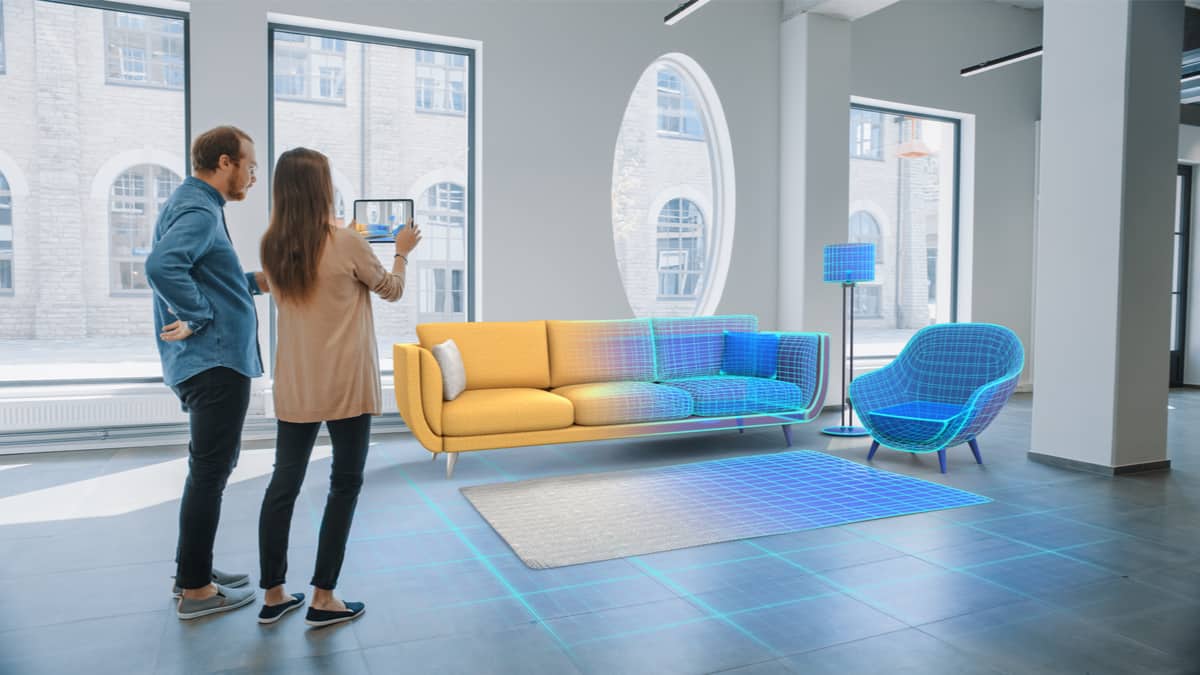
TS: Exactly. So cool, definitely has its market, has its place. AR is an interesting one, because so much has been poured into AR. That’s where you’ll have a camera view that’s put on a screen, you’ll overlay an image or an animation, Pokémon Go, something like that. So much has gone behind the research and development into that space. It consistently is viewed more as a novelty, because there are a lot of things that stop it from being a really powerful experience right now. One, which I loved, was I asked a group of people why they didn’t use the AR feature more on Amazon. They said, ‘because my arms are too tired’, which I thought was hilarious.
LL: You’re talking about when they say ‘show this in your environment’?
TS: Yes, when you scan the room, then you tap on an object, and you pop it down. They just say ‘my arms get too tired… I don’t want to do it’. I found that so funny because it really is cool. You can actually see the size and it’s a beautiful tool. But being locked into a frame is very unconducive for comfortability. XR is the merging of those worlds. You take the AR, but you blend it with the real photons that are coming at you from the environment, sort of that Metaverse that we talked about where there’s a holographic universe that you can go into and either see it merged and blended with your genuine reality or, in VR, you would enter a completely new expression of it and experience new things. They each have really cool places. The thing about XR, it requires a lot of visual creation. Right now, digital twinning is really at the forefront of that, being able to create scans of things and go into these spaces. It requires a lot of data and a lot of computation in a very short amount of time with a very small amount of battery that you can have on these systems. We’re getting to the point where it’s becoming more and more feasible, which is so exciting. It’s why it’s on everybody’s mind right now, having that Metaverse environment. The reason why the RYZ is really different… It’s technically XR, because we’re projecting light in space, and it’s interfering with the photons in the environment. It literally is the perception of something that’s jumped into your reality. The difference is it requires so much less processor load that you can make all the content yourself. You can literally download something from the internet, put it into our application, and the AI does everything for you in seconds, to be able to render that in the environment with touch control, with the ability to send it back with a Z-axis depth and volumetric perception. We see it as being a stepping stone. We’re adding this volumetric scanning capability… we’re adding the ability to immediately perceive it in your space. What we see is why wait to saturate the Metaverse with all this really cool content for like XR glasses, to finally get to where we need them to be, when we can literally start creating and experiencing all these things now with the new system that literally takes all that data from your phone and translates whatever you want?
LL: I also think it’s a distraction in general just to have a physical device on your head that changes your balance a little bit, right?
TS: 100%. A lot of injuries.
LL: I know some people, when they experience that type of thing, which I did when I had some tour inside of some building, it was this amazing experience, but I got nauseous. You’re not going to have that?
TS: You don’t get nauseous at all with this system. It’s the same comfortability of looking at a normal screen, just incredibly powerful. I remember attempting to play a game, and I loved the game so much that I was so into it that I had it on for two hours. When I took that thing off my eyes were incredibly irritated for two or three days just because I was so sucked into it that I completely forgot that blinking is important. With systems like this, it’s so natural to the environment that it becomes a part of it. |You don’t have that staring at something because it’s so overwhelming to the senses. It’s a convenient system that is improving your senses.
LL: What is the Metaverse? You just referenced it, but I know IKIN is part of that now and everybody’s heard that Facebook is now a meta – branding decision, of course – but, can you describe what the Metaverse is?
TS: I think of it as the evolved internet. We’ve seen movies. We’ve seen the Ready Player One movies. A lot of novels that it’s kind of based on back in the day, having the ability to enter into a new reality that is blended very realistically with this one. You can either enter in a completely new reality and have new experiences, or blend new experiences in this reality. It’s really beautiful when you think about it. There’s nothing stopping us from creating a world around the world, which is really exciting. It’s just a matter of time. The ability to capture data, we’ve had the ability to store it. Now it’s just a matter of nailing the experience. As we continue to build it, nailing how people engage with the Metaverse is just as important as the content that we put into it. I see it being really powerful, especially from an emotional connection standpoint. I remember playing Second Life, years ago when I was younger. It was incredibly enjoyable just because it was like you entered into this world and you could escape for a moment. Everyone needs that level of escape at times. Everybody gets it in different ways. Some people just drink coffee and read the newspaper. They get that escape moment. For me, it was that, being able to enter into a virtual world and experience my own experiences there, knowing that it was a completely different realm and you could go back to it when you wanted to. That’s really what we see for the Metaverse now. I think it’s powerful. It’s everything from being able to take old photos of your family, like old Polaroid photos as what we were recently testing, and to take your mobile phone and to be able to just wave it around the object and create that Metaverse object to where if you put the RYZ down on the table, or the ARC, you could actually see it placed on the table, click on it, and have it come up as a living holographic record of that polaroid. It’s just so cool.
LL: Very cool.
TS: And it’s permanent. That data is not lost, which means that in 300 years’ time, your great, great, great grandchildren will be able to literally look at a living polaroid from 1935, or whatever.
LL: Isn’t that amazing?
TS: It’s beautiful. Of course, with the internet, it’s going to require responsibility. It’s going to require control, we have to be careful how we use it, but it really stands to massively improve people’s emotional lives.
LL: The future of holograms, what’s it all going to look like in 50 years?
TS: Love the question because it could go in a lot of different directions. We are full steam ahead when it comes to AR lenses, XR lenses. I think there’s not a company on the planet in technology that is not keeping tabs on it or investing heavily in it, or designing and researching it. That’s definitely going to be the first step. There’s quite a lot of physics testing that’s being done on our side, as well as on the university level, as far as being able to sustain optical light volumetrically, that Princess Leia style. The question is when we have the power supply and the computers to do it, when do we have the physical space to be able to maintain that in a safe environment. It’s going to take some work, but it is by no means far-fetched to think that it’s a possibility within the next 50 to 100 years, to be able to have that genuine hologram there. In the meantime, we’re going to need a lot of content to display in it. We can start creating that now.
LL: You’re looking for people to help you do that, right? Developers, because you already have the toolkit.
TS: Exactly. Now we’re looking for developers that are really interested in taking a triple A experience and making it a triple A experience that nobody could possibly have had before, because this system hasn’t existed in this flexible state ever. On the other side, we’re looking for people, just normal people that are not developers, that just want to experience something beautiful, to get the RYZ and to be able to upload their content and socialize. I loved that Instagram when it first came on the scene. All I got was pictures of people’s lasagna and Cobb salads. But I enjoyed it like, ‘oh, yeah! My friend’s eating lunch.’ We want that in the hologram. We want to be able to actually see that lasagna on a table in my environment and be like, ‘that does look good.’ It’s the upgrade to the lasagna shot.
LL: What about shopping, being able to look at something like it’s almost really there, or, I would imagine, videoconferencing in a room where everybody else is a hologram? To me, that’s an amazing idea.
TS: It can be overwhelming when you really think about it, because we’ve limited the amount of time and effort it takes to create the content. Now, you try to ponder all the verticals and it’s dizzying. The greater question is what can’t you improve? That happens all the time, whenever we’re in conversations with our partners, developer partners. Well, what can’t we do with this? The answer is always, ‘you tell us’, because it’s a new visual way of taking what you already have, and just making it better. Think of how much you do on a daily basis that’s all based on visuals, everything from writing your emails to reading your text messages to looking through data on the internet. Visual is such a key part of our learning experiences and our communication, so we look forward to seeing how it’s going to evolve everything.
LL: The possibilities seem to be endless.
TS: Absolutely.
LL: Anything else you’d like to talk about, Taylor?
TS: I think we covered it. We got it pretty well.
LL: All right. Thanks so much very much for being here.
TS: Thank you.
LL: I always love listening to you talk about all this and to be such an incredible visionary that you are. Here you are talking about this incredible Metaverse universe that we’re going to have in the very near future with IKIN leading the charge.
TS: It’s exciting. Next time we’ll do this in a hologram.
LL: Let’s do it there. Thanks so much.
TS: Thank you.
LL: This has been RYZ: Reimagining Our Future. Thank you for making it possible for us to explore future technologies together. RYZ: Reimagining Our Future is presented by IKIN. If you enjoyed this show today, please join us next time and share this episode with your own network of future forward thinkers. Check out IKIN online at IKINin.com or i-k-i-n-i-n-c.com and remember to like, share, and follow IKIN on Instagram, Facebook, YouTube, and LinkedIn. This is Laura Lewis for IKIN. Until next time.