
Holograms for Smartphones Are Finally Here
“Holograms for smartphones are here!” It’s a jarring, almost unbelievable statement. Holograms are here. Yes. They’ve been here, and they are emerging anew today thanks to recent technological breakthroughs. With heightened realism, efficiency, and interactivity, hologram technology is impacting a broad spectrum of industries in novel and exciting ways, promising transformative cultural shifts achieved by only the most influential technologies of the past. Think: the printing press, automobiles, radio and television, the rise of the internet, and most recently smartphones themselves. Each of these technological marvels reoriented how we as individuals and as a unified society function in the modern day, expanding our physical reach as well as the reach of our ideas and communications. We were made bigger and brought closer together, unifying the world to a degree never before experienced.
The Defining Technology of Smartphones
THE ROUTE TO CELLULAR
Let us look at that latter example, the smartphone, as a case study of the impact technology can have on our daily lives. Long before the introduction of holograms for smartphones, telephones grew out of the telegraph, the proto-iteration communication medium that dates back to the 19th century. Morse code gave way to direct electronic audio conversations, but both were initially mediated by people as well as the technology itself. Operators who once transmitted and translated telegraph messages came to act as a central relay hub, a team of operators connecting callers to their intended lines for all telephone communications going in and out of a given area. Eventually, telephone systems allowed callers to dial in directly. Physical phone lines, however, limited the reach of telecommunications on the whole and kept users tethered to their homes until cellular technology cut the cord, allowing users to make calls on the go. At first, this took the form of the car phone, which granted the power to make and receive calls from the comfort of one’s vehicle, and much more broadly on the go with early, bulky brick phones that resembled military-grade walkie-talkies more than modern cell phones. Through the 1990s and into the 2000s, cell phones reduced in size dramatically, and additional functions, like texting, gaming, and cameras, became common, expected features.
THE EMERGENCE OF THE SMARTPHONE
Technically, the first smartphone to hit the market debuted way back in 1993. Designed by IBM and sold by BellSouth, the Simon–as it was known–boasted a touchscreen interface for navigating native organization apps like its calendar and address book. However, the adoption of smartphones didn’t reach a tipping point of popularity until the advent of 3G mobile phone networks in 2001. Increased 3G data processing rates introduced what have become foundational smartphone functions, like the ability to send and receive photographs, video clips, music and other files, e-mails, etc–essentially elevating cell phones to the level of computers complete with licensed operating systems and internet capabilities. And, while Blackberries enjoyed their heyday with working professionals, it was the unveiling of Apple’s iPhone in January 2007 that anointed smartphones as a staple of modern American life for the average consumer. The combination of sleek design and branding, and an intuitive touchscreen operation, exploded the iPhone’s popularity. In only a handful of years, Apple secured its position as the top smartphone vendor by both numbers and revenue–reporting 18.6m iPhone sales by April 2011.
SMARTPHONES TODAY
Smartphones now hold an essential place in our day to day, acting simultaneously as our primary conduit to news and information; entertainment; personal organization and planning; as a storage device for photos, videos, music, documents, and files of all types; and as a seamless means to communication–both direct and socially networked. The new foundational functions for smartphones are all the functions. Everything you can do on a computer or any number of other digital devices, we demand from our smartphones. It is the nexus of modern life for countless people across the globe, seen in hands everywhere you look.
The ubiquity of modern smartphones makes them big business. According to the research and consulting firm Market Data Forecast, the global smartphones market was valued at $784.96 billion USD for 2020, numbers which include a notable dip in the industry due to issues related to the COVID pandemic. With smartphone sales back on the rise in 2021, the big question on the minds of consumers is how new smartphone models are going to continue to evolve, particularly in the wake of 5G networks.
Integrating Holograms for Smartphones
THE TRIAL AND ERROR OF RED’S HYDROGEN ONE
One of the most alluring areas for consumers and manufacturers alike is the integration of holograms for smartphones. While still an emerging technology, previous efforts have been made to incorporate holograms for smartphones. Specifically, the industry-disrupting digital camera company Red Digital Cinema debuted the first holographic smartphone in 2018. In addition to traditional smartphone features, the Hydrogen One included a holographic screen and the capability to capture and store footage in a 3D format. Problems quickly emerged for the phone and company, however, with negative reviews pointing out the underwhelming holographic capabilities and general underperformance of the phone’s other functions and design. One October 2018 review by The Verge noted “It’s obvious this is RED’s first phone,” further lamenting that its “holographic display just isn’t very good.”
THE RYZ OF FUNCTIONAL HOLOGRAMS FOR SMARTPHONES
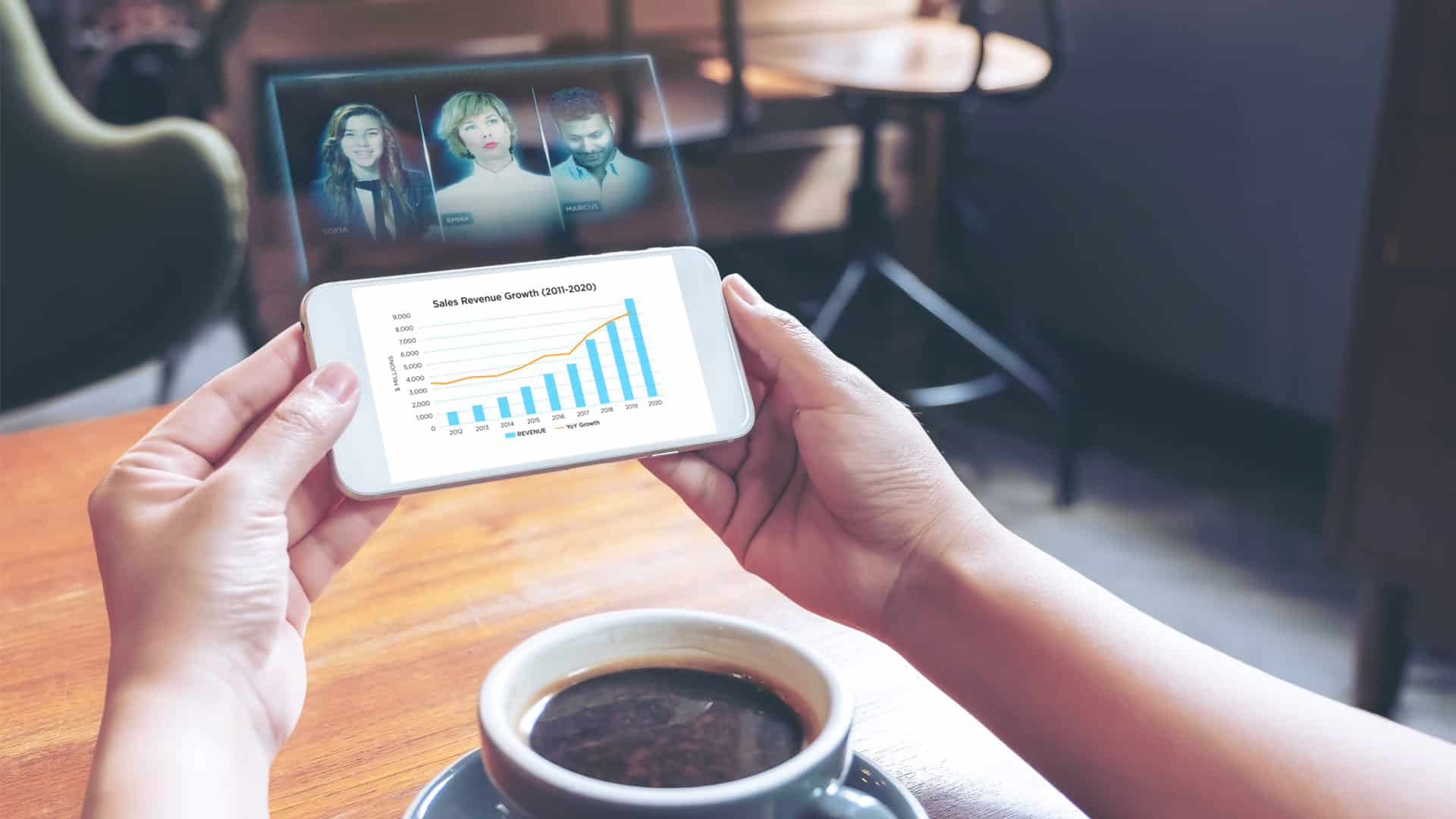
Now, a few years out from this first attempt to realize holograms for smartphones, the tech and business solutions company IKIN has emerged with a workable, impressive system for holographic smartphones in the form of their RYZ platform. The RYZ consists of a thin glass holographic screen that can pair with and ajoin existing smartphones to enable visualization of 3D volumetric holograms. The RYZ display projects in vibrant full-spectrum color and does not require goggles or glasses to view. It operates using an innovative AI, face-tracking software, and works on 4G networks while being optimized specifically for 5G. The platform’s accompanying SDK invited developers to design original volumetric holograms and allows for the conversion of 2D content into 3D holograms.
These are exciting times for smartphones. Technology is moving quicker than it ever has before, and with the advances made in hologram technology, ushered along by 5G network processing, we can say with confidence–for the first time–that holograms for smartphones are finally here.
Holograms for Smartphones Are Finally Here
“Holograms for smartphones are here!” It’s a jarring, almost unbelievable statement. Holograms are here. Yes. They’ve been here, and they are emerging anew today thanks to recent technological breakthroughs. With heightened realism, efficiency, and interactivity, hologram technology is impacting a broad spectrum of industries in novel and exciting ways, promising transformative cultural shifts achieved by only the most influential technologies of the past. Think: the printing press, automobiles, radio and television, the rise of the internet, and most recently smartphones themselves. Each of these technological marvels reoriented how we as individuals and as a unified society function in the modern day, expanding our physical reach as well as the reach of our ideas and communications. We were made bigger and brought closer together, unifying the world to a degree never before experienced.
The Defining Technology of Smartphones
THE ROUTE TO CELLULAR
Let us look at that latter example, the smartphone, as a case study of the impact technology can have on our daily lives. Long before the introduction of holograms for smartphones, telephones grew out of the telegraph, the proto-iteration communication medium that dates back to the 19th century. Morse code gave way to direct electronic audio conversations, but both were initially mediated by people as well as the technology itself. Operators who once transmitted and translated telegraph messages came to act as a central relay hub, a team of operators connecting callers to their intended lines for all telephone communications going in and out of a given area. Eventually, telephone systems allowed callers to dial in directly. Physical phone lines, however, limited the reach of telecommunications on the whole and kept users tethered to their homes until cellular technology cut the cord, allowing users to make calls on the go. At first, this took the form of the car phone, which granted the power to make and receive calls from the comfort of one’s vehicle, and much more broadly on the go with early, bulky brick phones that resembled military-grade walkie-talkies more than modern cell phones. Through the 1990s and into the 2000s, cell phones reduced in size dramatically, and additional functions, like texting, gaming, and cameras, became common, expected features.
THE EMERGENCE OF THE SMARTPHONE
Technically, the first smartphone to hit the market debuted way back in 1993. Designed by IBM and sold by BellSouth, the Simon–as it was known–boasted a touchscreen interface for navigating native organization apps like its calendar and address book. However, the adoption of smartphones didn’t reach a tipping point of popularity until the advent of 3G mobile phone networks in 2001. Increased 3G data processing rates introduced what have become foundational smartphone functions, like the ability to send and receive photographs, video clips, music and other files, e-mails, etc–essentially elevating cell phones to the level of computers complete with licensed operating systems and internet capabilities. And, while Blackberries enjoyed their heyday with working professionals, it was the unveiling of Apple’s iPhone in January 2007 that anointed smartphones as a staple of modern American life for the average consumer. The combination of sleek design and branding, and an intuitive touchscreen operation, exploded the iPhone’s popularity. In only a handful of years, Apple secured its position as the top smartphone vendor by both numbers and revenue–reporting 18.6m iPhone sales by April 2011.
SMARTPHONES TODAY
Smartphones now hold an essential place in our day to day, acting simultaneously as our primary conduit to news and information; entertainment; personal organization and planning; as a storage device for photos, videos, music, documents, and files of all types; and as a seamless means to communication–both direct and socially networked. The new foundational functions for smartphones are all the functions. Everything you can do on a computer or any number of other digital devices, we demand from our smartphones. It is the nexus of modern life for countless people across the globe, seen in hands everywhere you look.
The ubiquity of modern smartphones makes them big business. According to the research and consulting firm Market Data Forecast, the global smartphones market was valued at $784.96 billion USD for 2020, numbers which include a notable dip in the industry due to issues related to the COVID pandemic. With smartphone sales back on the rise in 2021, the big question on the minds of consumers is how new smartphone models are going to continue to evolve, particularly in the wake of 5G networks.
Integrating Holograms for Smartphones
THE TRIAL AND ERROR OF RED’S HYDROGEN ONE
One of the most alluring areas for consumers and manufacturers alike is the integration of holograms for smartphones. While still an emerging technology, previous efforts have been made to incorporate holograms for smartphones. Specifically, the industry-disrupting digital camera company Red Digital Cinema debuted the first holographic smartphone in 2018. In addition to traditional smartphone features, the Hydrogen One included a holographic screen and the capability to capture and store footage in a 3D format. Problems quickly emerged for the phone and company, however, with negative reviews pointing out the underwhelming holographic capabilities and general underperformance of the phone’s other functions and design. One October 2018 review by The Verge noted “It’s obvious this is RED’s first phone,” further lamenting that its “holographic display just isn’t very good.”
THE RYZ OF FUNCTIONAL HOLOGRAMS FOR SMARTPHONES
Now, a few years out from this first attempt to realize holograms for smartphones, the tech and business solutions company IKIN has emerged with a workable, impressive system for holographic smartphones in the form of their RYZ platform. The RYZ consists of a thin glass holographic screen that can pair with and ajoin existing smartphones to enable visualization of 3D volumetric holograms. The RYZ display projects in vibrant full-spectrum color and does not require goggles or glasses to view. It operates using an innovative AI, face-tracking software, and works on 4G networks while being optimized specifically for 5G. The platform’s accompanying SDK invited developers to design original volumetric holograms and allows for the conversion of 2D content into 3D holograms.
These are exciting times for smartphones. Technology is moving quicker than it ever has before, and with the advances made in hologram technology, ushered along by 5G network processing, we can say with confidence–for the first time–that holograms for smartphones are finally here.