Connecting The Dots Between IKIN, Unity, VR, Holograms, And The RYZ
IKIN has emerged as an industry leader of dimensional technology with its Unity-based RYZ device leading the charge for holograms, distinguishing IKIN’s 3D tech from other competing formats, like VR and AR. The company’s ever-evolving technology, novel applications, and expanding vision, mean that some of the details related to IKIN’s endeavors can be lost in the shuffle to those outside of IKIN’s internal operations. Recently, IKIN has been taking measures to clarify these details, including by launching a new, visionary podcast, “RYZ: Reimagining Our Future,” which sees co-founder and CTO Taylor Scott discussing future plans, industry trends, and emerging tech with the show’s host, Laura Lewis of LaLaPow. This article is part of that continued effort. In it, we will look at the role Unity’s development platform plays in relation to IKIN’s tech, how holograms differ from VR, and details about IKIN’s RYZ holographic system.
IKIN & Unity
IKIN is currently developing two holographic platforms, the compact RYZ mobile device and the IKIN ARC large format projector. Both systems utilize dimensional screens and SDKs to realize holographic content. The SDKs for both systems are Unity-based. This robust tech allows 3D developers who work in Unity to design original holographic content intuitively and to convert traditional 2D content into 3D easily via an AI-driven automated process. IKIN is actively recruiting 3D Unity developers for a paid RYZ beta program to test the device and SDK as part of their product rollout. Interested developers can apply here.
Holograms & VR
The Unity game engine is one of the most used and respected platforms for game and content design, and, with their recent acquisition of VFX company Weta, Unity is primed for an even more impactful future. Unity emphasizes 3D perspectives, and it is already used to create VR 3D content. Thus, its application in holographic 3D content is a logical evolution. Combined with IKIN’s AI and dimensional display, holograms offer a refinement of the VR experience. IKIN holograms are volumetric, consistently scaleable, and accurately representative. Additionally, unlike VR, IKIN holograms do not rely on the aid of a headset. Instead, the dimensional screen realizes the 3D content. And, because of the company’s head-tracking tech, perspectives and proxemics are authentic to the vantage point of the user.
The RYZ
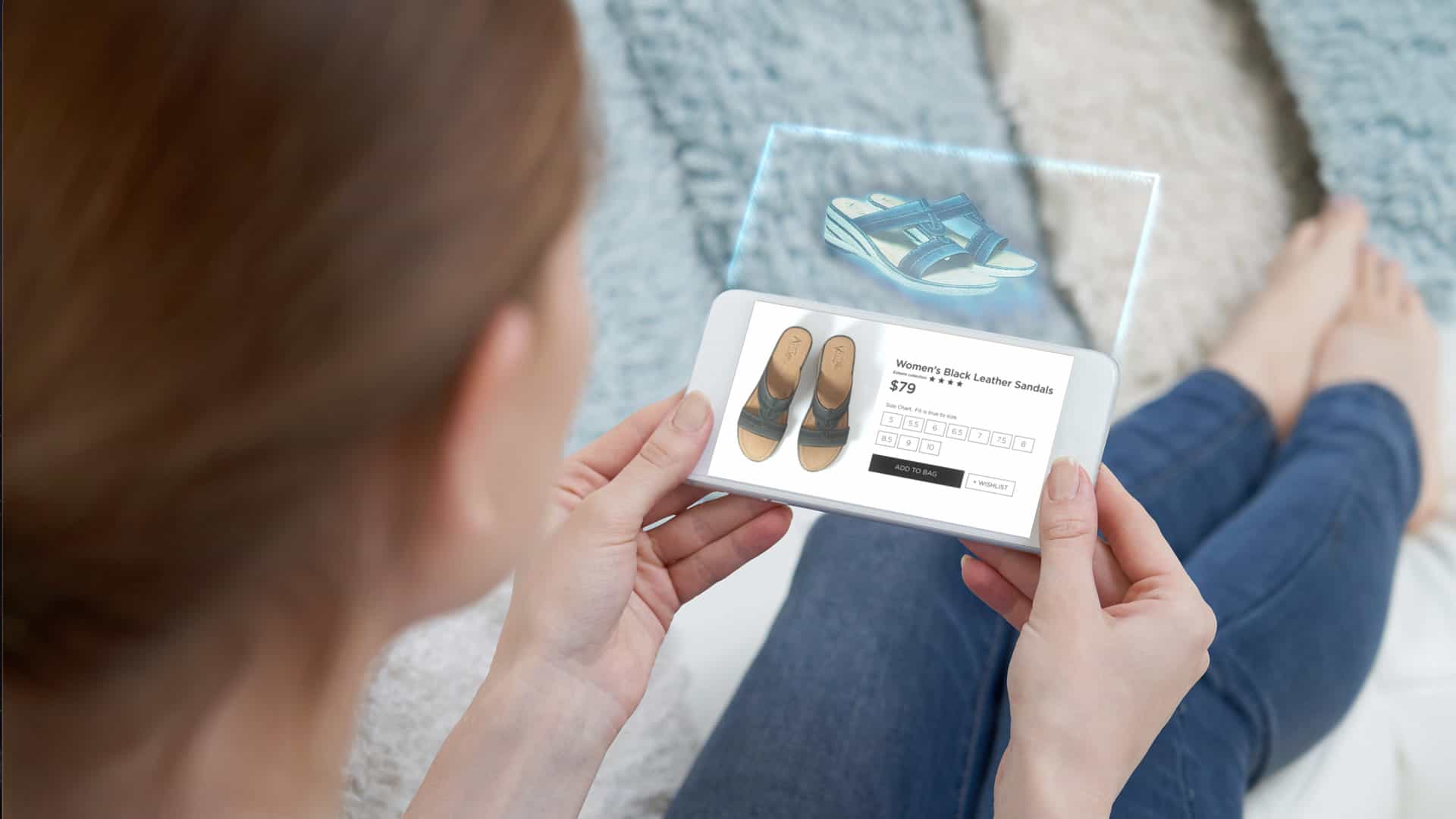
The RYZ is IKIN’s holographic system for mobile. It is a compact dimensional screen that renders holographic content and an accompanying SDK that can be used by developers and businesses to create original holograms or automatically convert 2D content into 3D. Unlike the IKIN ARC, which is intended as a large-format desktop display, the RYZ is a much smaller on-the-go system that pairs with mobile devices like your smartphone. The RYZ dimensional display does not require headgear or glasses to operate. Instead, it uses AI-driven head tracking technology to generate natural perspectives for holograms that can be viewed in natural light. Bult for 5G, the RYZ boasts zero latency including dynamic streaming.
Continued Efforts
As IKIN pushes holography further, the technology is continuing to evolve. With it, applications are growing as businesses and consumers alike continue to adopt new holographic solutions to their needs. With some much happening so fast, it is important to stay informed lest you find yourself left behind. IKIN offers multiple ways to stay abreast of company and industry news, including following the IKIN podcast, IKIN social outlets, the IKIN Blog, and IKIN In the News. All of these resources offer high returns for those seeking to stay in the know of the technology, of today, tomorrow, and beyond.